Feed on
Posts
Comments

With only 16 days to my next trip to Munich, expect a little more Germania than usual around here.  I’ve been pacing myself with just a smattering of German literature so far this year.  However, I reckon that now is the time for full-scale indulgence.   Aldi stocking my favourite German beer is a great aid to the prerequisite training program … and, on a more cerebral note,  I have no less than 3 German novels on the go ….

If you’ve been paying attention recently, you’ll have noticed Cathy Dobson’s Planet Germany  placed at the top of the current reading widget for a  number of weeks. The length of time there, not a negative reflection on the book. It was making me irritable with longing and envy, and so I needed to read it in very short sections for a while.  But now that the gloves are off so to speak, I raced through the remaining 3/4’s in just two evenings last week.

After a decade of living in Germany, Cathy and her ex-pat British family finally decided to fully integrate, adopt German tradition and participate fully in its customs.  Planet Germany details their (mis)adventures during that year of total immersion in all things Germanic.    Chaos rules in Cathy’s rambling farmhouse and converted pigsty as she deals with the manic cocktail of three school-age children, a herd of cats, including one megalomaniac tom, and the multitude of German bylaws.  However, for every bylaw imposing Ordnung, such as one that prevents disposal of bottles in a bottle bank during lunchtime and another that imposes a maximum height on pine trees, there is a good excuse for a party: New Year, Karneval (when the whole of Germany dresses up in fancy dress), May Day, St Martin’s Day ….. 

Woven between the parties, beer and Glühwein, the fabric of German life is observed with the sardonic humour of a benign foreign eye.  The madness of the autobahn, the dangers of the slug and the dachshund on the bicycle paths and, of course, gas-generating German cuisine.  I think Cathy is just a little unfair in that latter section.  However, a little bitterness is understandable given her valiant attempts in serving British food to her German friends.  Roast beef and yorkshire pudding, traditional Christmas turkey with all the trimmings both meeting with derision.  Nothing compared though to what happened when she tried feeding curry to the Germans.   My own faux-pas in this respect was steak and kidney pie.  Lots of wrinkled Teutonic noses there!  Trifle, too, in my experience generated initial suspicion.  Not for long though.  In fact, it became the de rigeur dessert at my table once I’d added the secret ingredient - a generous dash of Himbeerschnaps (raspberry schnaps) - to the sponge!)

Many thanks to Cathy for sending me a copy of her book.  It brought back many, many memories …. including one of a Fasching (fancy-dress) party in which everyone from the office turned up dressed as me ……… fortunately for the guilty, that was in the era prior to the advent of digital photography!


Courtesy of


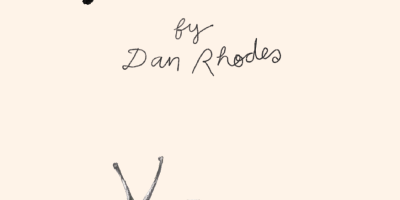
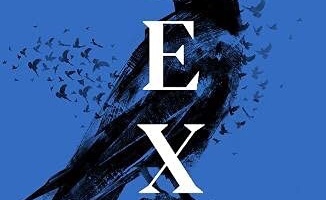
Before I’d even started reading this 441 page chunkster, I knew I was going to enjoy it.  The echoes of Tintin in the artwork providing a hint of the adventure to come, and the title, the Pandora’s box of nasties literary goodies.

The first chapter is one of the most entertaining I have read in many a novel. Set in pre-World-War-1 London, a 19-year-old impoverished would-be author, Thomas Thomson,  is employed as a ghost-writer to pen a pulp novel for the famous Dr.  Flag.  The title is “Pandora in the Congo” and the outline is both racist and ridiculous.  Against his better judgment, the ghost-writer does as he is bid and his work is published.  Thereafter, Thomas discovers that he has been subcontracted by a ghost-writer, in turn  employed by a ghost-writer struggling to meet the excessing demands of the fraudulent Dr. Flag.  The arm of his exploitation is long! 

Despite this, he comes to the attention of a lawyer, Edward Norton, who is looking for someone to ghostwrite the memoirs of his client, Marcus Garvey, currently accused of the murder of two British aristocrats in the African jungle. The lawyer feels that publication of Garvey’s version of events prior to the trial is the only chance his client has of escaping the noose.

Garvey’s story forms the main course of Piñol’s novel.  African adventure au Haggard with echoes of colonial excess and Conrad’s Heart of Darkness. Science-fictional homage to both Jules Verne and H G Wells involving a journey to the centre of the earth and an underground race of six-fingered, hot-skinned Tectons.   With a  tender-hearted love story thrown in for good measure.

In a parallel stream, Thomas tells of his humdrum existence as one of the unprivileged in class-conscious Edwardian London, living in a boarding house terrorised by a shell-less tortoise.  (Yes, you really read that.  She’s called Marie-Antoinette.) Thomas understands that Norton is exploiting him as did Dr. Flag but he doesn’t understand exactly how.  I’m not going to reveal all but I will give you some clues.  It’s ingenious. it’s ruthless and it’s extremely manipulative.  Oh yes, check out the character Edward Norton played in the film Primal Fear.  Not all the cultural references in this book are from literature.

To enjoy this novel you have to suspend belief in many places because Piñol does stretch things into the absurd.  Neither does his game-playing stop with the multitudinous homage to authors of the Edwardian era or the names of his characters.   His metafictional novel contains a book within a book.  If fact, it’s a rewrite of a book within a book, 3 layers of fiction thus mirroring the 3 layers of ghost-writing from the opening chapter. It transpires that Thomas, in old age, is rewriting the book that made his name, i.e Garvey’s African Adventure.  But why?  Can we trust him? Layers of meaning and layers of doubt.  But don’t let any of this put you off.  Forget the cleverness.  Read it for the entertainment value.  It’s not perfect.  In places it takes too long.  However, without a shadow of a doubt, it is an absolute riot!


Fellow salonists may be experiencing problems linking to my blog today.  It’s a long story but it’s definitely my fault and I apologise.

This link should work though.

“What?” I hear my fellow bookworms cry!  It is true.  A humungous pile of domestic (un)bliss, or the ironing, is currently more attractive than the cinema trip I had planned for this afternoon. A trip to see the film of the book I read last week.  Which book?  One heralded as “one of the best detective novels of recent years”  and winner of the 2003 Planeta Prize.   One in which the solution , with a body count of 13 (by my reckoning), is based on the solving of an intriguing mathematical puzzle.

Nothing as seductive as mathematical puzzles.  As if I can solve them.  I was educated in an age when it was impossible to study languages and sciences after O-level.  It simply wasn’t done.  So at that point my mathematical career stalled but I remain fascinated.   Remembering that in a right-angled triangle the square of the hypotenuse is equal to the sum of the squares of the other two sides, that is, a² + b² = c², I confidently predicted much pleasure from a book interwoven with Pythagorean symbiology.  Throw in Gödel’s theorem of incompleteness, Wittgenstein’s infinite rule paradox and Fermat’s last theorem and suddenly I’m really missing that Ph D in mathematics I wish I’d held out for!  Fortunately the author of this book has one, as does the professor of mathematics at Oxford University who wrote this review.  Yes, I can understand his pleasure in prose like this:

My hypothesis is that is is profoundly linked to the aesthetic that has been promulgated down the ages and has been, essentially, unchanging.  There is no Kantian forcing, but an aesthetic of simplicity and elegance which also guides the formulation of conjectures; mathematicians believe that the beauty of a theorem requires certain divine proportions between the simplicity of the axioms at the starting point, and the simplicity of the thesis at the point of arrival.  

As the layman rightly said, “Eh?”  Now this may be clever but in literary terms it is hit-over-the-head-with-a-sledge-hammer exposition.  And there’s reams of it.  Fortunately lightened with a love story, although the romance is devoid of fire or passion even if, at one point,  the couple “make love all afternoon like happy rabbits“.  This interpersed, of course, with the plot,  for this is a murder mystery.  Pedestrian (despite the body count) and quite poor.  I twigged it at the first murder.  Perhaps it’s my lack of mathematical finesse but how can you recognise a symbolic sequence is starting when there is only one clue?  Surely you need at least two?

You will,  of course, have identified Guillermo Martinez’s critically-acclaimed but Lizzy-derided The Oxford Murders.  Avoid the book.  If you see the film, do let me know just how John Hurt manages to make the lines such as those quoted above entertaining.  Nobody’s that good, surely.

0


ISBN: 0571232914 / 978057123291
Publication Date (UK): 1.05.2008
Review copy

 The Man in the Window is K O Dahl’s third novel in his Gunnarstranda/Frohlich series but only the second to be translated into English.  I reviewed The Fourth Man last year.  This review copy was kindly sent by Faber and Faber.  Many thanks!

The title character is a naked corpse found in a shop window early one morning by a unsuspecting passerby.  The dead man is Reidar Folke Jesperson and there are many with a motive to kill him - almost everyone in his family, in fact.  Their motives firmly established in the first section of the novel which describes the last day of his life.

Nothing  more about the crime or its resolution except to say that there is, after 482 pages (in the review copy) a surprising denouement.  A good mystery, full of twists, turns and red herrings and at times pulse-raising suspense.  Themes of love, guilt, betrayal and the shadow of the past resonating not only in the mystery but also in the lives of the detectives on the case.  In particular the love life of Frolich, a man struggling to extricate himself from a dissatisfactory relationship before embarking on something new.    Here at a restaurant with his longstanding girlfriend:

“We had all this in the discussion on TV last night, didn’t we”, he answered slowly. “The topic was done to death”.

She was hurt.  Because the answer was too brutal, he thought.  In other words, being uninterested , or not feigning interest is too brutal.  …. she would not allow herself to reveal too much of the hurt.  Instead she fled into a self-constructed state of mind … Eva-Britt’s demilitarised zone.  Here the important thing was to be disarming , to find neutral ground as soon as possible.  As usual she blew out her cheeks.  “I am so full” she said, imitating a beach ball.  “All blob!”

In other situations Dahl is more lyrical and philosophical.  Here the thoughts of the 78 year old murder victim.

It was a feeling he hated more than any other - how, with the passing of the years, apathy had sneaked into his consciousness in the same way that mist seeps into the forest to make it impenetrable and colourless.

I thoroughly enjoyed The Man in The Window even though The Fourth Man  is a stronger,  more sensational novel.  This is to be expected - The Fourth Man, translated first, is number 5 in the series and,  thus, the more recent offeringFirm evidence, therefore,  of Dahl’s improved writerly skills.  Such are the vagaries of reading translated fiction. I hear that Faber have commissioned the translations of novels 2 and 6.  In some way the sequence of their publication is irrelevant.  I shall read them both.

The Booker may be 40 years old but I confess it only entered my consciousness in 1991 - a couple of years after I returned to British shores. 

Booker-wise the 1990s started well with A.S.Byatt’s Possession - a book I have read twice and loved both times.  Despite my disagreement with the author’s stance on the Orange Prize, Possession appears on my personal Best of Booker shortlist.  1992 saw Sacred Hunger share the prize with The (interminably dull) English Patient.  You just know when a book grabs me by the horns and refuses to let go.  I have to find myself a 1st edition … the 1st edition of Sacred Hunger is the most expensive second-hand volume in my library. After Paddy Clarke Ha Ha Ha  (which I didn’t like), Kelman’s How Late It Was, How Late (which I refuse to read - too many sweary words), 1995 heralded the brilliance of Pat Barker’s The Ghost Road, a stunning ending to the Regeneration trilogy.  (Which reminds me I have yet to see the film.) Last Orders was unfinishable, The God of Small Things moved me to tears but I remember nothing of it now,  I enjoyed (!) Amsterdam.  The decade ended badly though with Disgrace.  I thought it was exactly that!  Details elude me now but, after many years of others detailing its brilliance, perhaps I ought to give it a second try.

What about the 2000s? 

Blind Assassin, a confusing but promising start. The True History of the Kelly Gang remains in the TBR.  2002’s Life of Pi, a refreshingly enjoyable read.  (Note to self - reread at earliest opportunity.)  Lamentably it is also the most recent Booker I have read.  Since 2003 there has been no winner of immediate appeal to me.  I started listening to an unabridged recording of The Inheritance of Loss a couple of weeks ago.  Lots of descriptive phrases but nothing to hold my attention whilst driving.  It’s a story that needs to be read in peace and quiet.  I shall return to it at a later date.

I have a number of pre-1990’s Bookers in the TBR including The Remains of the Day  which I promise myself I shall have read before the official shortlist is announced.  It’s a dead cert to appear on the list, isn’t it?  Midnight’s Children another, although it will have to win if I’m to contemplate reading it.  The Ground Beneath Her Feet my one, only and last (?) experience with Rushdie.  I can’t see the truly unforgettable The Bone People being at all acceptable to modern-day audiences but it may just get the 6th place on my personal list, which currently looks like this:

1) 1990 Possession - A S Byatt
2) 1992 Sacred Hunger - Barry Unsworth
3) 1995 The Ghost Road - Pat Barker
4) 2002 Life of Pi - Yann Martel
5) Reserved for 1989 The Remains of the Day
6) 1985 The Bone People or one of the following from my TBR (The Siege of Krishnapur / Offshore / Staying On / In A Free State /something by Peter Carey).

Of course, the real shortlist will look nothing like the above.  There’s far too much history on it, nothing experimental (unless you count Martel’s piece) but it does show my preference for narratives of the traditional kind.  EDIT: I’m forgetting there’s nothing traditional about The Bone People either.  Perhaps I’m not quite the fuddy-duddy I imagine myself to be.

Care to share your shortlists?  There’s a handy reference of the winners here.  Is there any one title I should make a beeline for because my reading will be incomplete should I pass it over? 


The sight of the American book cover was enough to start me salivating in anticipation. And like a hungry child impatient for dinner, I had to snack. Fortunately snacking on McGrath’s Ghost Town - Tales of Manhattan Then and Now didn’t spoil my appetite for the main course, McGrath’s Trauma. In fact I devoured that in one two-and-a-half hour sitting. More of which later.

First the snack or, to serve it better justice, for it is an altogether classier dish, the hors d’oeuvre. Ghost Town - Tales of Manhattan Then and Now is a collection of 3 stories all set in New York City although in  different eras and entirely different situations. The Tale of the Gibbet is a death-bed confession of a man still attempting to come to terms with the guilt he feels over his mother’s death during the American War of Independence. Julius tells of the fallout when a young man is separated from his low-class lady-love through the intervention of his disapproving wealthy family. The final story Ground Zero is McGrath’s “obligatory”  take on 9/11,

a watershed in all our lives, a line of demarcation, or a point in time rather, before which the world seemed to glow with a patina of innocence and clarity and health.  And after which everything seemed dark and tortured and incomprehensible, bearing nothing but portents of a greater darkness to come.

The narrator is a psychiatrist whose patient begins a love affair with a woman mourning the loss of her lover in the twin towers. The patient already has problems sustaining intimate relationships with the opposite sex and his new lover is far too complicated a woman for him.  The signs aren’t good and even the psychiatrist becomes anxious …..

McGrath’s prose is clear, direct, very readable and infused with multiple psychological layers. The third story was for me the superior, although that’s not to detract from the quality of the first two. I read McGrath for the psychological content, the tortured minds, and they are more complex and intriguing in Ground Zero.  Perhaps it’s the contemporary setting making the issues more immediate but this is the tale I’ll remember of the three. 1/2

In many ways Trauma  is the natural successor of Ghost Town, sharing the contemporary setting, various themes and the anxious psychiatrist.  His universe contains a neurotic lover, a troubled mother, a manipulative brother and an absent waistrel father.  But at what point does trouble become traumatic?  You’d think that the psychiatrist would be capable of recognising and averting.  However, doctors are the worst patients and so

It is truly demoralizing to feel yourself powerless to prevent the repetition of a pattern of behavior that you recognize as productive only of suffering.  I had helped many distressed men and women … eventually disrupt such patterns of compulsive behavior; but apparently I couldn’t do the same for myself.

Other fascinating psychiatric facts emerge also.

It is the mothers who propel most of us into psychiatry, usually because we have failed them.

(Typical - as usual the mother is to blame!)

Trauma  is like watching a  train crash in slow motion.   Full-on plot driven action interspersed with a gradual peeling back of the human psyche - twisted in cases, merely damaged in others.   Utterly impossible to put down. Brilliant!

Other references:
Interview with Patrick McGrath at The Asylum


I’m pinching this superb idea from Simon’s Stuck-in-a-Book and creating an alphabet of my current favourites.

A = Kate Atkinson (Anything except Human Croquet).
B = William Boyd (Slowly working my way through the backcatalogue. Here and here.)
C = Michael Collins, James M Cain
D = Roald Dahl (Because I refuse to grow up!)
E = Umberto Eco (The Name of the Rose)
F = Michael Frayn (Headlong hilarious, Spies superb!)
G = Janice Galloway, Andrew Greig from Scotland. And I’m a recent convert to Mrs. Gaskell.
H = Patricia Highsmith
I = Kazuo Ishiguro (I thought Never Let Me Go an understated masterpiece and I shall be reading Remains of the Day very, very soon)
J = Clive James (I love the humour, I love the intelligence …), P D James (I love Adam Dalgleish …)
K = Molly Keane (Good Behaviour funny but so sad ….)
L = Andrea Levy (Small Island is unbeatable.)
M = Brian Moore (So good he deserves a blog of his own ….)
N = Jo Nesbo (Detective Harry Hole doesn’t just drink, he’s a full scale alcoholic)
O = Panama Oxridge (Loved Justin Thyme to piecesWhen’s the second one due? )
P =
Ann Patchett (Bel Canto one of my personal top 10.)
Q = ?
R = Phillip Reeve (The fantasy of the Mortal Engines sequence is simply phenomenal.)
S = Theodor Storm (The master of the novella. See here and here.)
T = Leo Tolstoy (War and Peace is great, Prince Andrei is just delicious!)
U = Barry Unsworth (He received my vote for the greatest living British author last year.)
V = Fred Vargas (Quirky French crime)
W= John Wyndham (A maestro of science fiction), Edith Wharton (recent convert alert!)
X = ?
Y = Richard Yates (Miserable but ever so beautifully written)
Z = Stefan Zweig (Another master of the novella)

As I’m still working through the backlists of most of the above, I expect each and every one of these names to make further appearances on this blog during the next twelve months. Obviously I need some Es and Qs and Xs to complete the project. Any suggestions?

Nancy Huston, a bilingual Canadian living in France, won the Prix Femina in 2006.  She has since translated her French novel into English and now finds it shortlisted for the 2008 Orange Prize.  That Prix Femina augurs well.  It’s a French prize judged by a purely female panel …..

Huston’s novel is told in reverse chronological sequence.  It’s not a device of which I’m particularly fond.  The danger of knowing the end that is about to be uncovered can lead to a loss of interest and a failure to read to the end (as in my case Sarah Water’s The Night Watch). Not true here, I’m pleased to say.

Fault Lines tells the tale of four generations of the same family.  The spacing of 20 years between each episode (2004, 1984, 1962, 1944-45) and the diverse locations (California, Haifa, Toronto, Germany) distingush the details in each section sufficiently to keep the reader turning the pages. Events in section 2 revealing the root causes of the dysfunction of section 1 etc. Dysfunction and misanthropy increasing as events become more contemporary. But there’s actually no way of knowing that until you’ve read to the end of the novel …

… which means that the obnoxious child narrator of section 1, Sol, is an absolute shock to the system.  A spoilt 21st century brat of a magnitude unrivalled, reared by modern, indulgent, over-protective parents. He is the culmination of the ripple effect.  The child narrator of the 4th section, the one most badly served by history, however, is the most sympathetic of them all, with debate to be had as to at which point in her troubled history, the damage was done.

This makes Huston’s novel not only a fascinating commentary on the effects of history and war but also a commentay of the effects of bad parenting.

Less successful, however, are the narrative voices, in particular that of Sol. How many 6-year olds with a fully fledged messiah complex would pleasure themselves while watching brutal internet images of events in Iraq?  Fortunately the successive (or should that be the preceding) generations become less flawed until the final, most emotive, section rings true.

That reservation aside, this is a very readable work, despite the heaviness of its themes. No idea how it compares to the rest of this year’s shortlist, but I definitely preferred it to last year’s Orange prize winner.

0 1/2

I have loved the hatchets wielded on Vulpes Libris this week - someone invent an award quickly!  I haven’t always agreed with them. In fact, I felt downright defensive during the attack on Tolstoy.  However,  as I haven’t yet read The Kreutzer Sonata, I’ll let it pass …  Mark well, my  pretty little book foxes, I shall be compelled to return to this at a later date.

Attention turned to Thomas Hardy and Jude the Obscure - a book I have always found therapeutic.  Hardy has to be the king of mislit and no matter how tough reality gets, Jude’s experiences make it feel better!

Quite by chance I was preparing for my book group, the next title being Tess of the D’Urbervilles.  To be honest, I’ve avoided Tess like the plague.  I saw the film - the Roman Polanski one - a few years ago and always felt that I couldn’t approach the novel.  My blood would boil.  Imagine my surprise when I found myself falling asleep … day after day after day …..

***** Spoiler alert *****

My problem is a major one.  Tess’s sob story doesn’t convince me.  She’s too pretty, too bland, sweetly dairy and milk-maidy … and so utterly fixated on being a victim that she is unable to free herself from her circumstances.  And she had opportunity aplenty.  Why was noone on hand to administer a good shaking/kick up the posterior and drive some sense in her head.   Too honest to keep silent?  Too proud to accept charity from your in-laws?  Good grief girl -  whine all you wish but all that achieved was an appointment with the gallows! Actions have consequences and you landed exactly where your own choices put you.

I would have applauded you, however,  had you turned on that hypocritical guttersnipe that you called Angel.  Oh no, his halo didn’t slip.    But to use as a pretext for your crime a statement which only you could interpret as a lie.  That’s completely dishonourable and  I have no sympathy!

***** End of spoilers *****

All of the above making the plot sound like a ménage-à-trois of the highly dramatic kind and a darned sight more interesting to read than it was.  How so?  In a word, pacing. A leisurely amble through the countryside - landscape prefiguring drama ad nauseam. In addition, we know that Tess and Angel will marry, we also know that Tess will tell her secret but do we really need 120 pages of romantic idyll and belly-aching to get us to that point?  Particularly as the pivotal scenes with Alec are so obscured - the first discretely smothered in fog, the second hidden behind closed doors.  Is this inconsistency or genius?  Don’t know.  Don’t care.  I was just relieved to get to the end.

 1/2

I’ve written the above before I start a thorough investigation of the novel.  I do like to know my way around the book group reads especially as I lead the discussion.  The novel may well rise in my estimation when I start reading the critiques and appreciating Hardy’s stylistic devices - use of landscapes, foreshadowing and omens.  I already appreciate the subtlety in the characterisations of Alec and Angel - lots of blurring boundaries there.  The most enjoyable part of the novel, in fact, and a heady mix for a book group blood-bath discussion.

As for the question Is Alec a rapist? , I found an excellent essay on this in The Folio Book of Literary Puzzles.   If you’re not a Folio Society enthusiast like me, the same essay can be found in John Sutherland’s Was Heathcliffe A Murderer? 

Older Posts »